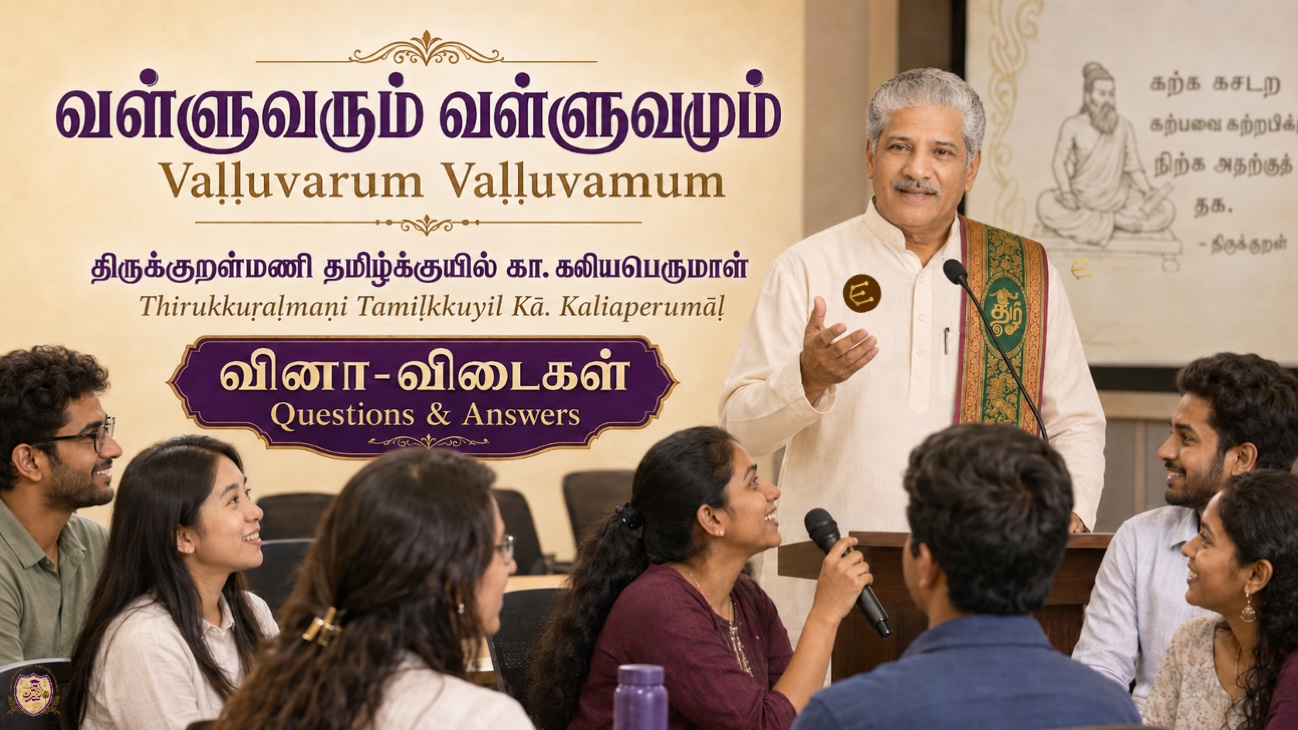
Vaḷḷuvarum Vaḷḷuvamum — Explained by Thirukkuṟaḷmaṇi Tamiḻkkuyil K. Kaliaperumal

அடிக்கடி எழும் வினாக்கள்

Frequently Asked Questions

தமிழ் மற்றும் புலம்பெயர் தமிழர் ஆய்வு நிறுவனம் (TTDRI) மற்றும் Euleris.ai இணைந்து வழங்கும்:

Tamil and Tamilar Diaspora Research Institute (TTDRI), in collaboration with Euleris.ai present:

வள்ளுவரும் வள்ளுவமும்Vaḷḷuvarum Vaḷḷuvamum

திருக்குறள்மணி தமிழ்க்குயில் கா. கலியபெருமாள் விளக்குகிறார்

Explained by Thirukkuṟaḷmaṇi Tamiḻkkuyil K. Kaliaperumal

📘 வள்ளுவர் பற்றியும் வள்ளுவம் பற்றியும் முழுமையான அறிமுகம் பெற, "வள்ளுவரும் வள்ளுவமும்" பாடநெறியில் இணையுங்கள்.

Vaḷḷuvar pattriyum Vaḷḷuvam pattriyum muḻumaiyāṉa aṟimugam peṟa, "Vaḷḷuvarum Vaḷḷuvamum" pāḍaneṟiyil iṇaiyungaḷ.

📘 For a complete introduction to Vaḷḷuvar and Vaḷḷuvam, join the course “Vaḷḷuvarum Vaḷḷuvamum” on Euleris.

Explore the course

வினாவும் விடையும்

Questions and Answers

திருக்குறளை நெருங்கும் ஒவ்வொருவர் உள்ளத்திலும் சில வினாக்கள் எழும். வள்ளுவர் யார்? குறள் ஏன் இன்றளவும் நிலைத்து நிற்கிறது? இத்தகைய வினாக்களுக்குத் தமிழ்க்குயில் அவர்கள் அளித்த விடைகள் இங்கே தொகுக்கப்பட்டுள்ளன.

விரும்பிய வினாவைத் தொடுங்கள் — குயிலார் உங்களோடு உரையாடுவார்.

Everyone who comes to the Thirukkuṟaḷ arrives carrying a few questions. Who was Vaḷḷuvar? Why does the Kuṟaḷ still stand, after all these centuries? Here are the answers Tamiḻkkuyil gave to those exact questions.

Touch the question you want, and Kuyilār will speak with you.

தமிழ்க்குயிலாரின் மாணவர் ஆசிரியர் துரைமுருகனார் அறிமுக உரை

Introduction by Tamiḻkkuyilār’s student, Teacher Duraimurugannār

உள்ளம் உயர, கள்ளம் கலைய, தெள்ளு தமிழின் வள்ளுவம் வழியே!

May the heart rise, may deceit dissolve — along the path of Valluvam, in pristine Tamil!

"திருக்குறள் படித்தால் தீவினை அகலும்; திருக்குறள் படித்தால் தெய்வமும் ஆகலாம்" என்பது தமிழ்க்குயிலார் வாக்கு.

“Study the Thirukkuṟaḷ, and evil deeds fall away; study the Thirukkuṟaḷ, and one may even become divine” — so runs the saying of Tamilkuyil.

மலேசியாவில் நாடறிந்த எழுத்தாளரும், நல்ல தமிழ்ப் பேச்சாளரும், திருக்குறளைப் போதித்தும் திருக்குறள் கருத்தரங்குகளை நடத்தியும் "திருக்குறள்மணி" எனும் பெருவிருது பெற்றவரும், "உலகத் தமிழர் பண்பாட்டுக் களஞ்சியம்" எனும் மாபெரும் வழிகாட்டி நூலைத் தமிழ்கூறும் நல்லுலகிற்குத் தந்தவருமான தமிழ் முனைவர் கா. கலியபெருமாள் அவர்கள், "திருக்குறளுக்கு ஒரு முன்னோட்டம்" என்ற தலைப்பில் 12-12-1997 அன்று இப்போவில் ஆற்றிய சொற்பொழிவிற்குப் பின் அளித்த விடைகள்.

These are the answers given by Tamil Munaivar K. Kaliaperumal — renowned writer in Malaysia, gifted Tamil orator, teacher of the Thirukkuṟaḷ and convener of Thirukkuṟaḷ conferences, recipient of the great title “Thirukkuṟaḷmaṇi,” and the one who gave to the good world of Tamil the monumental reference work Ulaga Tamilar Panpaattu Kalanjiyam (The Encyclopedia of World Tamil Culture) — following his lecture “An Introduction to the Thirukkuṟaḷ,” delivered at Ipoh on 12 December 1997.

கடவுள் வாழ்த்து · Kaḍavuḷ vāḻtthu · Benediction

இன்பமே சூழ்க! எல்லோரும் வாழ்க!

Iṉbamē sūḻga! Ellōrum vāḻga!

May joy surround! May all flourish!

Click a question to jump to Kuyilār’s recorded answer

கேள்வி 1 · Question 1

Thirukkuṟaḷ Greatness

திருக்குறளின் பெருமை பற்றியும், அதைத் தமிழர் அறிந்துகொள்ள வேண்டியதன் தேவை பற்றியும் தாங்கள் கூற விரும்புவது என்ன?

Thirukkuṟaḷiṉ perumai pattriyum, athaith Tamiḻar aṟinthukoḷḷa vēṇḍiyathaṉ thēvai pattriyum tāngaḷ kūṟa virumbuvathu eṉṉa?

What would you like to say about the greatness of the Thirukkuṟaḷ — and about why the Tamil people must come to know it?

Kuyilār’s recorded answer
Learn more

விடைச் சுருக்கம் · Synopsis

எண்ணற்ற மொழிகளில் மொழிபெயர்ப்புகள், எண்ணற்ற உரைநூல்களும் ஆய்வுகளும் — இவை எதைக் காட்டுகின்றன? திருக்குறளை "இனமானக் கேடயம்" என்றும் தமிழரின் "தாய்வழிச் சொத்து" என்றும் அழைக்கும் குயிலார், அதை அறிந்துகொள்ள வேண்டும் என்று அழைப்பு விடுக்கிறார்.

Translations into countless languages; countless commentaries and studies — what do they all point to? Kuyilār calls the Thirukkuṟaḷ the shield of Tamil honor and the maternal inheritance of every Tamil — and issues his call: come to know what it holds.

கேள்வி 2 · Question 2

Thiruvaḷḷuvamālai

திருவள்ளுவமாலையில் பழம்பெரும் புலவர்கள் திருக்குறளை எவ்வாறு போற்றியுள்ளனர்? அவர்களின் பாடல்கள் திருக்குறளின் எந்தச் சிறப்புகளை எடுத்துக்காட்டுகின்றன?

Thiruvaḷḷuvamālaiyil paḻamberum pulavargaḷ Thirukkuṟaḷai evvāṟu pōttriyuḷḷaṉar? Avargaḷiṉ pāḍalgaḷ Thirukkuṟaḷiṉ enthach siṟappugaḷai eḍutthukkāṭṭugiṉdraṉa?

How did the great poets of old praise the Thirukkuṟaḷ in the Thiruvalluvamalai? What glories of the Kuṟaḷ do their verses single out?

Kuyilār’s recorded answer
Learn more

விடைச் சுருக்கம் · Synopsis

"கடுகைத் துளைத்து ஏழ்கடலைப் புகட்டி" என்றார் இடைக்காடனார்; "இல்லை, கடுகு அல்ல — அணு" என்று திருத்தினார் ஔவையார். பாரதமும் இராமாயணமும் திருக்குறளுக்கு நிகராகா என்று பாடிய பெருந்தேவனார் முதல், சமயக் கணக்கு எதுவும் கூறாத உலகியல் நூல் என்று போற்றிய கல்லாடனார் வரை — திருவள்ளுவமாலைப் புலவர்களின் பாராட்டுப் பேரணியைக் குயிலார் நடத்திச் செல்கிறார்.

“He pierced a mustard seed and poured in the seven seas,” sang Idaikkadanar of the Kuṟaḷ’s compression — “No,” corrected Auvaiyar, “not a mustard seed: an atom.” From Perundevanar, who ranked the Kuṟaḷ above both great epics, to Kalladanar, who praised Valluvar for teaching worldly truth beholden to no sect’s reckoning — Kuyilār leads a procession through the poets of the Thiruvalluvamalai.

Verses cited (canonical text)

இடைக்காடனார் — "கடுகைத் துளைத்தேழ் கடலைப் புகட்டிக் குறுகத் தறித்த குறள்"

ஔவையார் — "அணுவைத் துளைத்தேழ் கடலைப் புகட்டிக் குறுகத் தறித்த குறள்"

பெருந்தேவனார், மாங்குடி மருதனார், கல்லாடனார் — [full verses per திருவள்ளுவமாலை edition at assembly]

கேள்வி 3 · Question 3

Jainism

திருக்குறள் ஒரு சமண நூல் என்று பலர் வாதிடுகின்றனர். இது குறித்து தங்கள் கருத்து என்ன?

Thirukkuṟaḷ oru samaṇa nūl eṉdru palar vādhiḍugiṉdraṉar. Ithu kuṟittu tangaḷ karuttu eṉṉa?

Many argue that the Thirukkuṟaḷ is a Jain text. What is your view on this?

Kuyilār’s recorded answer
Learn more

விடைச் சுருக்கம் · Synopsis

நிலவைப் பார்த்து ஒவ்வொருவரும் "என் மதி" என்று சொல்லிக்கொள்வது போல, உயர்ந்த நூலை எல்லாரும் சொந்தம் கொண்டாட விரும்புகின்றனர். சமணர் மட்டுமல்ல — கிறித்தவ ஆய்வுகள் கூட இப்போது உரிமை கோருகின்றன! வள்ளுவர் எதை எங்கே வைத்தார் என்பதில் மறைந்திருக்கும் விடையைக் குயிலார் காட்டுகிறார்.

Like everyone gazing at the moon and calling it “my moon,” all wish to claim an exalted book as their own — not just the Jains; even Christian scholarship now stakes its claim! The answer, Kuyilār shows, hides in where Vaḷḷuvar placed what. Listen for it.

கேள்வி 4 · Question 4

Seven Births

சமயம் சாராத வள்ளுவர் ஏழு பிறவிகளைப் பற்றிப் பேசுவது ஏன்?

Samayam sārātha Vaḷḷuvar ēḻu piṟavigaḷaip pattrip pēsuvathu ēṉ?

Why does Valluvar, who stood apart from religion, speak of seven births?

Kuyilār’s recorded answer
Learn more

விடைச் சுருக்கம் · Synopsis

"நாலு அஞ்சு பழம் வாங்கிட்டு வா" என்று சொல்லும்போது நாம் எண்ணிக்கொண்டா சொல்கிறோம்? "ஏழு" என்பது தமிழ் வழக்கில் என்ன, "எழுபிறப்பு" என்பதற்கு வேறு ஒரு பொருளே இருக்க முடியுமா — குயிலார் விளக்குகிறார். இறுதியில் அவர் சொல்லும் ஒரு எச்சரிக்கை: நம் பார்வைப்படி வள்ளுவர் இல்லை என்று வள்ளுவரிடம் கோபித்துக்கொள்ளக் கூடாது.

“Pick up four-five fruits on your way” — is anyone counting? Kuyilār unpacks what “seven” really does in Tamil idiom, and whether eḻupiṟappu might mean something else entirely — hiding in plain sight in the very verb. He closes with a warning worth the whole collection: don’t go getting cross with Valluvar because he fails to match your view of him.

கேள்வி 5 · Question 5

God, Without Image

திருவள்ளுவருக்குக் கடவுள் நம்பிக்கை இருந்தும், வள்ளுவம் ஏன் ஒரு நிறுவன சமயமாக மாறவில்லை?

Thiruvaḷḷuvarukkuk kaḍavuḷ nambikkai irunthum, Vaḷḷuvam ēṉ oru niṟuvaṉa samayamāga māṟavillai?

Though Thiruvaḷḷuvar believed in God, why did Vaḷḷuvam not become an organized religion?

Kuyilār’s recorded answer
Learn more

விடைச் சுருக்கம் · Synopsis

1,330 குறள்களிலும் வள்ளுவர் தெய்வத்திற்கு ஒரு வடிவம் கூடக் கற்பிக்கவில்லை — ஏன்? அவர் சொன்னது இரண்டே செய்திகள். இறைவனுக்கும் மக்களுக்கும் இடையில் ஆள் இல்லாத பழந்தமிழ் நெறியை, அமைப்பு வழி சிந்திக்காத தமிழ் மனத்தை — குயிலார் விளக்கக் கேளுங்கள்.

In all 1,330 verses, Vaḷḷuvar never once gives God a form — why? His instruction, Kuyilār says, was just two things. Listen for the old Tamil way that placed no intermediary between God and the people — and the Tamil cast of mind that never thought through institutions.

கேள்வி 6 · Question 6

Confucius

கன்பூசியசு போதித்த நெறிகளுக்கும் திருவள்ளுவர் குறளில் கூறியுள்ள நெறிகளுக்கும் உள்ள வேற்றுமை ஒற்றுமைகள் என்ன?

Kaṉbūsiyasu pōthittha neṟigaḷukkum Thiruvaḷḷuvar Kuṟaḷil kūṟiyuḷḷa neṟigaḷukkum uḷḷa vēttrumai ottrumaigaḷ eṉṉa?

What are the differences and similarities between the principles Confucius taught and those Thiruvalluvar set forth in the Kuṟaḷ?

Kuyilār’s recorded answer
Learn more

விடைச் சுருக்கம் · Synopsis

நெறி சொல்லும்போது காற்றைப் பார்த்துச் சொல்ல முடியாது — யாரையாவது நோக்கியே சொல்ல வேண்டும். கன்பூசியசு ஒரு சமூகத்தை நோக்கினார்; வள்ளுவர் இன்னொன்றை. ஆனால் இருவருக்கும் ஒரு ஆழமான ஒற்றுமை உண்டு என்கிறார் குயிலார் — பக்திக்கும் அறிவுக்கும் இடையிலான ஒரு கோட்டில் அது இருக்கிறது. கேளுங்கள்.

Moral teaching cannot be spoken to the wind — it must be addressed to someone. Confucius addressed one society; Vaḷḷuvar another. But the two share one deep kinship, Kuyilār says — and it lies on the line between devotion and reason. Listen for it.

கேள்வி 7 · Question 7

Why It Didn’t Spread

கன்பூசியம் உலகெங்கும் பரவியது போல வள்ளுவம் ஏன் பரவவில்லை என்று தாங்கள் கருதுகிறீர்கள்?

Kaṉbūsiyam ulagengum paraviyathu pōla Vaḷḷuvam ēṉ paravavillai eṉdru tāngaḷ karuthugiṟīrgaḷ?

Why do you think Valluvam did not spread across the world the way Confucianism did?

Kuyilār’s recorded answer
Learn more

விடைச் சுருக்கம் · Synopsis

கன்பூசியம் மதமாக ஏற்கப்பட்டது; வள்ளுவம் அறிவு நெறியாகத் திறந்த வெளியில் நின்றது — எத்தனை பேர் பற்றுவர்? அதோடு இன்னொரு காரணமும் உண்டு என்கிறார் குயிலார்: வள்ளுவம் பரவினால் பலருடைய வயிறு காயும். யாருடைய வயிறு, ஏன் — கேளுங்கள்.

Confucianism was embraced as a religion; Vaḷḷuvam stood in the open air as a code of reason — and how many seize that? But there is another reason, Kuyilār says: if Vaḷḷuvam spread, many stomachs would go hungry. Whose, and why — listen.

கேள்வி 8 · Question 8

The Cost of No Institution

தமிழர் சிந்தனையில் நிறுவன அணுகுமுறை என்பதே இல்லை என்கிறீர்கள். இந்த அமைப்பின்மை, பிற சமயங்கள் தமிழரை எளிதில் ஈர்த்துச் செல்ல வழி வகுத்ததா?

Tamiḻar sinthaṉaiyil niṟuvaṉa aṇugumuṟai eṉbathē illai eṉgiṟīrgaḷ. Intha amaippiṉmai, piṟa samayangaḷ Tamiḻarai eḷithil īrtthuch chella vaḻi vagutthathā?

You say that an institutional approach never existed in Tamil thought. Did this lack of organization make it easier for other religions to draw the Tamil people to themselves?

Kuyilār’s recorded answer
Learn more

விடைச் சுருக்கம் · Synopsis

ஆம் என்கிறார் குயிலார் — ஆனால் அமைப்பின்மை பாதிக் காரணமே. அமைப்பு முறையோடு வந்தவர்கள் யாரை எளிதில் ஈர்த்தார்கள், ஏன் அவர்கள் அழைப்பை ஏற்றார்கள் என்பதில்தான் கசப்பான உண்மை இருக்கிறது. கல்வியும் உணவும் மானமும் பறிக்கப்பட்டவனின் ஆதங்கம் பற்றி அவர் சொல்வதைக் கேளுங்கள்.

Yes, Kuyilār answers — but the absence of organization is only half the story. The harder truth lies in who was most easily drawn away, and why they answered the call. Listen for what he says about the anguish of those denied learning, food, and dignity.

கேள்வி 9 · Question 9

Ethics and Law

திருவள்ளுவர் தம் காலத்திலேயே பல புரட்சிகளைச் செய்தவர். ஆனால் அவர் வகுத்த நெறிகள் ஏன் சட்டமாக மாறவில்லை? நெறிக்கும் சட்டத்திற்கும் என்ன வேறுபாடு?

Thiruvaḷḷuvar tam kālatthilēyē pala puraṭchigaḷaich seythavar. Āṉāl avar vagutta neṟigaḷ ēṉ saṭṭamāga māṟavillai? Neṟikkum saṭṭatthiṟkum eṉṉa vēṟubāḍu?

Thiruvalluvar carried out many revolutions in his own time. But why did the principles he set forth never become law? What separates ethics from law?

Kuyilār’s recorded answer
Learn more

விடைச் சுருக்கம் · Synopsis

தொல்காப்பியம் ஏற்றுக்கொண்ட பரத்தையர் பிரிவை வள்ளுவர் ஏற்கவில்லை — அவரது புரட்சிகளில் இது ஒன்று. ஆனால் நெறி ஒருபோதும் தண்டிக்காது; அது கலங்கரை விளக்கம் போன்றது என்கிறார் குயிலார். நெறி எப்போது சட்டமாகும், வள்ளுவர் ஏன் அந்த எல்லையைத் தாண்டவில்லை — கேளுங்கள்.

Tolkappiyam accepted a husband’s dalliance as convention; Valluvar refused it — one of his quiet revolutions. Yet நெறி never punishes, Kuyilār says; it is a lighthouse. Listen for where ethics turns into law — and why Valluvar deliberately stopped short of that line.

கேள்வி 10 · Question 10

Then and Now

திருவள்ளுவர் வாழ்ந்தது இரண்டாயிரம் ஆண்டுகளுக்கு முன்பு. அறிவியல் யுகம் என்று சொல்லப்படும் இன்றைய காலத்திற்கும் திருக்குறள் பொருந்துமா?

Thiruvaḷḷuvar vāḻnthathu iraṇḍāyiram āṇḍugaḷukku muṉbu. Aṟiviyal yugam eṉdru sollappaḍum iṉdraiya kālatthiṟkum Thirukkuṟaḷ porunthumā?

Thiruvaḷḷuvar lived two thousand years ago. Does the Thirukkuṟaḷ still hold for today’s age — the age, as we call it, of science?

Kuyilār’s recorded answer
Learn more

விடைச் சுருக்கம் · Synopsis

அக்கால உடை, நாகரீகம், பண்பாடு — எதுவும் இன்று பொருந்தாது என்று ஒப்புக்கொள்கிறார் குயிலார். ஆனால் வள்ளுவர் சொன்னவை புறச்செய்திகள் அல்ல, அகச்செய்திகள். அன்பைப் பற்றி திருக்குறள் போல் வேறு எந்த மொழியிலும் யாரும் சொன்னதில்லை — ஆனால் அதை நடைமுறைப்படுத்தியவர்கள் யார்? அந்தக் கசப்பான பதிலைக் கேளுங்கள்.

The dress, manners, and social culture of Vaḷḷuvar’s day — none of it fits today, Kuyilār freely concedes. But what Vaḷḷuvar taught was never the outer world; it was the inner one. No book in any language, he says, speaks of love as the Kuṟaḷ does — yet who actually put that love into practice? Listen for his uncomfortable answer.

கேள்வி 11 · Question 11

Education

தம் காலச் சமுதாயத்தின் குறைகளைக் கண்ட வள்ளுவர், அவற்றை நிவர்த்திக்க எவ்வாறு முயன்றார்? கல்வியை அவர் எவ்வாறு அணுகினார்?

Tam kālach samuthāyatthiṉ kuṟaigaḷaik kaṇḍa Vaḷḷuvar, avattrai nivartthikka evvāṟu muyaṉdrār? Kalviyai avar evvāṟu aṇuginār?

Seeing the deficiencies of his society, how did Valluvar set about remedying them? How did he approach education?

Kuyilār’s recorded answer
Learn more

விடைச் சுருக்கம் · Synopsis

"கற்க கசடற" — இந்தச் சொற்களுக்குள் இரண்டு பொருள்கள் ஒளிந்திருப்பதை எத்தனை பேர் கவனித்திருக்கிறோம்? பெண் கல்வியை வள்ளுவர் நுட்பமாக ஏற்ற விதத்தையும், தாழ்வு மனப்பான்மை இல்லாத அவரது நம்பிக்கை நெறியையும் குயிலார் விளக்குகிறார்.

“Kaṟka kasaḍaṟa” — learn flawlessly. But how many of us have noticed the second meaning hiding in those words? Kuyilār unfolds Valluvar’s subtle acceptance of women’s education and a teaching that never spoke from inferiority — only from confidence: act, and fitting success will follow.

கேள்வி 12 · Question 12

Praise Without Practice

இன்று திருக்குறளைப் புகழ்ந்து பேசுவோர் பலர்; மேடைகள்தோறும் திருக்குறள் ஒலிக்கிறது. ஆனால் அதன் பயன் மக்களைச் சென்றடைந்ததா? பேச்சளவில் நின்றுவிட்டதா?

Iṉdru Thirukkuṟaḷaip pugaḻnthu pēsuvōr palar; mēḍaigaḷthōṟum Thirukkuṟaḷ olikkiṟathu. Āṉāl athaṉ payaṉ makkaḷaich seṉdraḍainthathā? Pēchchaḷavil niṉdruviṭṭathā?

Many praise the Thirukkuṟaḷ today; it rings from every stage. But has its benefit ever reached the people — or has it stopped at speech?

Kuyilār’s recorded answer
Learn more

விடைச் சுருக்கம் · Synopsis

திருக்குறளைப் புகழாத மேடை இல்லை — ஆனால் நடைமுறைப்படுத்த முயல்பவர் யார்? பேச்சோடு நின்றுபோனதால் கடைசி மனிதன் வரை அது போய்ச் சேரவில்லை என்கிறார் குயிலார். இறுதியில், திருக்குறளின் நிலையை ஒரே ஒரு உவமையில் அடக்குகிறார்: ஒரு இரப்பர் — இழுத்தால் நீளும்; விட்டால்?

No stage goes without praising the Thirukkuṟaḷ — but who tries to practice it? Because it stopped at speech, Kuyilār says, it never reached the last man in society. He ends by capturing the Kuṟaḷ’s whole condition in a single image: a rubber band — pull, and it stretches as far as you like; let go, and…?

கேள்வி 13 · Question 13

The Era of Valluvar’s Times

திருக்குறள் தமிழரை ஒன்றிணைக்கவே எழுதப்பட்டது என்பர். அக்காலத்தில் என்ன சிக்கல் நிலவியது? அப்போதைய சூழ்நிலை எவ்வாறு இருந்தது என்று தாங்கள் கருதுகிறீர்கள்?

Thirukkuṟaḷ Tamiḻarai oṉdriṇaikkavē eḻuthappaṭṭathu eṉbar. Akkālattil eṉṉa sikkal nilaviyathu? Appōthaiya sūḻnilai evvāṟu irunthathu eṉdru tāngaḷ karuthugiṟīrgaḷ?

It is said that the Thirukkuṟaḷ was written to unite the Tamil people. What problem prevailed at that time? What do you think the atmosphere of that era was like?

Kuyilār’s recorded answer
Learn more

விடைச் சுருக்கம் · Synopsis

தந்தை அறிவுரை அதிகம் சொன்னால், வீட்டில் கோளாறு அதிகம் என்று பொருள் — அப்படியானால் ஒற்றுமையை வலியுறுத்திய வள்ளுவரின் காலம் எப்படி இருந்திருக்கும்? வள்ளுவர் சொன்னதை வைத்து அவர் காலத்தைப் படிக்கும் முறையைக் குயிலார் காட்டுகிறார் — தமிழர் எப்போது தம் நெறியை இழந்தார்கள் என்பதையும். கேளுங்கள்.

When a father gives abundant advice, the household has abundant trouble — so what does Vaḷḷuvar’s insistence on unity tell us about his times? Kuyilār shows how to read an era through what its teacher emphasized — and names the moment the Tamils let go of their own way. Listen.

கேள்வி 14 · Question 14

The Decimal Design

திருக்குறளின் அமைப்பே பத்து பத்தாக — ஒவ்வோர் அதிகாரத்திற்கும் பத்து குறள்கள். இந்தத் தசாம்ச முறையை வள்ளுவர் திட்டமிட்டே அமைத்தார் என்று கருதலாமா?

Thirukkuṟaḷiṉ amaippē patthu patthāga — ovvōr athikāratthiṟkum patthu kuṟaḷgaḷ. Inthath thasāmsa muṟaiyai Vaḷḷuvar thiṭṭamiṭṭē amaitthār eṉdru karuthalāmā?

The very structure of the Thirukkuṟaḷ runs in tens — ten kuṟaḷs to every chapter. May we take it that Valluvar designed this decimal scheme deliberately?

Kuyilār’s recorded answer
Learn more

விடைச் சுருக்கம் · Synopsis

ஒவ்வோர் அதிகாரத்திற்கும் பத்து குறள்கள் — ஏன்? தசாம்ச முறை, பதிகம் பாடும் மரபு, நூறு வெற்றிலைக் கணக்கு — இவற்றின் வழியே திருக்குறளின் கட்டமைப்பை ஆய்கிறார் குயிலார். பத்தைத் தாண்டியே பாடாத வள்ளுவரின் கட்டுப்பாடு பற்றிக் கேளுங்கள்.

Ten Kuṟaḷs to every chapter — why? Kuyilār explores the Kuṟaḷ’s decimal architecture through Tamil counting customs, the pathigam tradition, and a marketplace that counted betel leaves by the hundred. Listen for the discipline of a poet who never once exceeded ten — two thousand years ago.

கேள்வி 15 · Question 15

The Thiruvalluvar Year

திருவள்ளுவர் ஆண்டு எப்படித் தோன்றியது? தமிழருக்கு என்று ஒரு தொடர் ஆண்டு ஏன் தேவைப்பட்டது?

Thiruvaḷḷuvar āṇḍu eppaḍith thōṉdriyathu? Tamiḻarukku eṉdru oru thoḍar āṇḍu ēṉ thēvaippaṭṭathu?

How did the Thiruvalluvar Era come to be? Why did the Tamil people need a continuous era of their own?

Kuyilār’s recorded answer
Learn more

விடைச் சுருக்கம் · Synopsis

இசுலாமிய ஆண்டுக்கு ஹிஜ்ரா; கிறித்தவ ஆண்டுக்கு இயேசு பிறப்பு. தமிழனுக்கு? வடமொழி மரபில் வந்த அறுபதாண்டு வட்டம் — பிரபவ முதல் அட்சய வரை; வட்டம் முடிந்ததும் மீண்டும் பிரபவ. சுற்றுமே தவிர, எண்ணிக் கூட்டிச் செல்லாது. வள்ளுவரை "எல்லைக் கோடாக" வைத்து அறிஞர்கள் தமிழ் ஆண்டு வகுத்த வரலாற்றைக் குயிலார் விவரிக்கிறார் — இறுதியில், தான் இதைச் சொல்வதன் காரணத்தையும்: "விவரம் தெரிந்தவர்கள் தெளிவுபடுத்த வேண்டும்." கேளுங்கள்.

Islam counts from the Hijra; the Christian era from a birth. And the Tamil? A sixty-year wheel from the Sanskrit tradition — Prabhava through Akshaya, then back to Prabhava again. It circles; it never counts forward. Kuyilār tells how the scholars fixed a Tamil era with Vaḷḷuvar as its boundary line — and closes with why he tells it at all: it falls to those who know a little to make things clear. Listen.