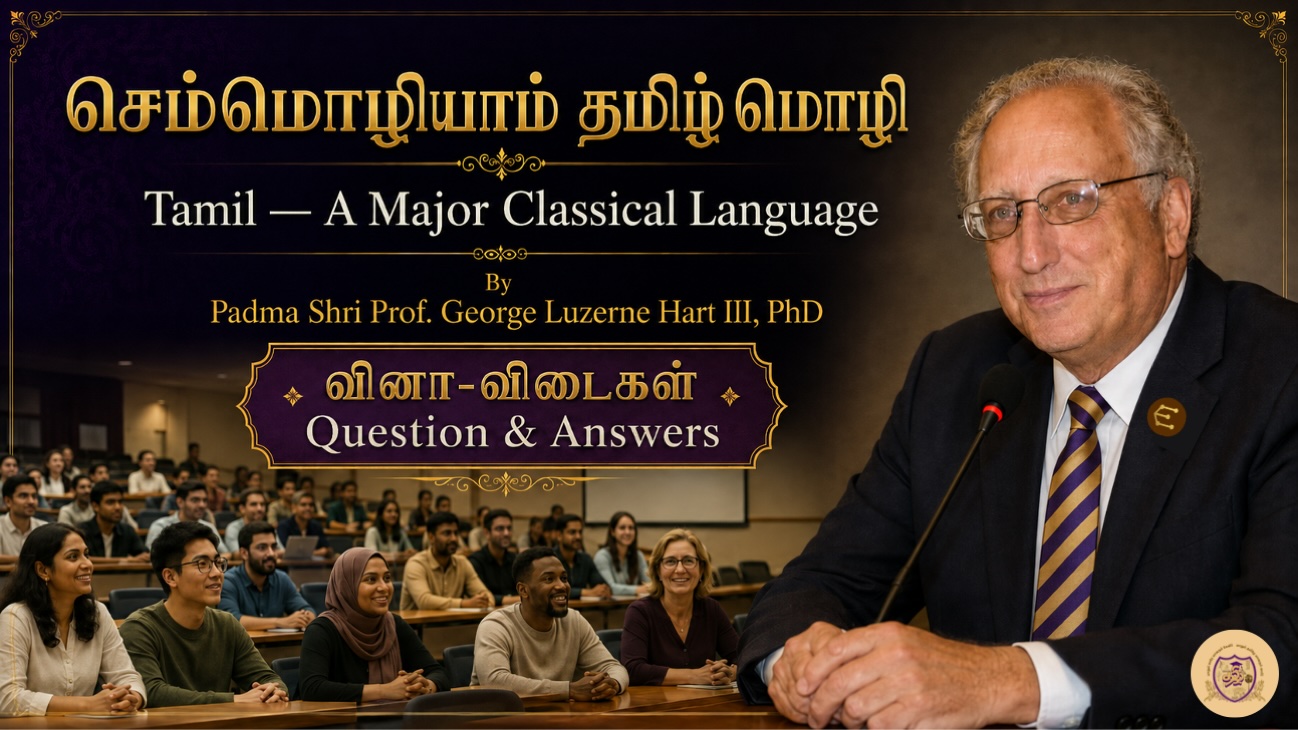
Semmoḻiyām Tamiḻ Moḻi — Tamil — A Major Classical Language, Explained by Padma Shri Professor George L. Hart

அடிக்கடி எழும் வினாக்கள்

Frequently Asked Questions

தமிழ் மற்றும் புலம்பெயர் தமிழர் ஆய்வு நிறுவனம் (TTDRI) மற்றும் Euleris.ai இணைந்து வழங்கும்:

Tamil and Tamilar Diaspora Research Institute (TTDRI), in collaboration with Euleris.ai, presents:

செம்மொழியாம் தமிழ் மொழிSemmoḻiyām Tamiḻ MoḻiTamil — A Major Classical Language

பத்மஸ்ரீ பேராசிரியர் ஜார்ஜ் எல். ஹார்ட் விளக்குகிறார்

Explained by Padma Shri Professor George L. Hart

📘 செம்மொழியாம் தமிழ் பற்றிய முழுமையான அறிமுகம் பெற, "செம்மொழியாம் தமிழ் மொழி" பாடநெறியில் இணையுங்கள்.

Semmoḻiyām Tamiḻ pattṟiya muḻumaiyāṉa aṟimugam peṟa, "Semmoḻiyām Tamiḻ moḻi" pāḍaneṟiyil iṇaiyungaḷ.

📘 For a complete introduction to Tamiḻ as a classical language, join the course “Semmoḻiyām Tamiḻ moḻi” on Euleris.

Explore the course

Introduction by Professor Kalai Mathee

Founder and President, Tamiḻ and Tamiḻar Diaspora Research Institute

Professor Hart came to Harvard for chemistry and physics, but language won him over — Latin, Sanskrit, and then Tamiḻ, studied under A. K. Ramanujan at Wisconsin–Madison, where he met his wife Kausalya.

At Berkeley he became a foremost scholar of classical Tamiḻ, and his case for its antiquity helped win Tamiḻ India’s recognition as a Classical Language in 2004. With Hank Heifetz he brought the Puṟanāṉūṟu and Akanāṉūṟu into English; the Padma Shri followed in 2015.

It is not the Tamiḻar he converted, but the rest of the world — it is my great honor to welcome Professor George Hart.

பேராசிரியர் ஆர்ட்டு தமிழில் பேசுகிறார்

Professor Hart speaks in Tamiḻ

அனைவருக்கும் வணக்கம்.

Greetings to you all.

இன்று நாம் தமிழைப் பற்றிப் பேசப் போகிறோம். தமிழ் என்றால் என்ன? உலக மொழிகளுக்குள் தமிழ் ஒரு முக்கியமான மொழி. அதுமட்டுமா — உலகில் ஐந்தாறு மொழிகளுக்கு மட்டுமே கிடைத்த செம்மொழிப் பெருமை தமிழுக்கும் உண்டு. தமிழை ஏன் செம்மொழி என்று சொல்கிறோம்? அதைப் பற்றியே இன்று பேச விரும்புகிறேன். தமிழில் பேசுவேன், ஆனால் சொற்பொழிவு ஆற்றும் அளவுக்கு அல்ல; எனவே இனி ஆங்கிலத்தில் தொடர விரும்புகிறேன்.

Today we are going to speak about Tamiḻ. What is Tamiḻ? Among the languages of the world, Tamiḻ is a language of importance. And not that alone — the distinction of being a classical language, which only five or six languages in the world have received, belongs to Tamiḻ as well. Why do we call Tamiḻ a classical language? That is what I would like to speak about today. I can speak in Tamiḻ, but not well enough to give a lecture; and so, I would like to continue in English.

வினாவும் விடையும்

Questions and Answers

Editorial note: The views expressed in this Q&A are Professor Hart's own, offered based on his academic expertise. The Tamiḻ and Tamiḻar Diaspora Research Institute presents them as his scholarly position, without modification, qualification, or extension.

Click a question to jump to Professor Hart’s recorded answer

கேள்வி 1 · Question 1

Drawn to Tamiḻ

கடல் கடந்த நாட்டில், தமிழ் ஒலிக்காத சூழலில் வளர்ந்த தங்களை — தமிழ் எவ்வாறு ஈர்த்தது?

Kaḍal kaḍantha nāṭṭil, Tamiḻ olikkātha sūḻalil vaḷarntha tāngaḷai — Tamiḻ evvāṟu īrtthathu?

You grew up across the seas, where no Tamiḻ was spoken — what drew you to Tamiḻ?

Professor Hart’s recorded answer
Learn more

விடைச் சுருக்கம் · Synopsis

கிரேக்கம், இலத்தீன், வடமொழி — இந்தையிரோப்பியக் குடும்பத்தின் மொழிகளையே கற்று வந்தவருக்கு, அக் குடும்பத்திற்கு வெளியே நின்று தனித்த இலக்கியம் கொண்ட மொழி ஒன்று உண்டு என்ற செய்தி மீண்டும் மீண்டும் எதிர்ப்பட்டது. வேறொன்றைக் கற்கும் ஆவல் பிறந்தது. அப்போது ஆசிரியராகக் கிடைத்தவர் அ. கி. ராமானுசன் — கன்னடக் கவிஞர், சங்க இலக்கியத்தை அப்போதுதான் தானும் கண்டுகொண்டவர்; ஐம்பது மாணவரை ஒரே சொற்பொழிவில் தமிழ் கற்க விழையச் செய்தவர். மனைவி கௌசல்யாவையும் தமிழ் பயின்ற அதே காலத்தில் கண்டார்.

He had been learning the Indo-European languages — Greek, Latin, Sanskrit — when he kept meeting, in his reading, the notice of a language that stood outside that family altogether and carried a literature of its own. He wanted something different. The teacher he found was A. K. Ramanujan, a Kannada poet who had only just discovered Sangam literature himself, and who could send fifty undergraduates out of a single lecture all wanting to learn Tamiḻ. He met his wife Kausalya in that same first season of study.

Audio transcript

Sanskrit is basically an old Indo-European language. The Indo-Europeans moved into South Asia gradually — they did not even reach the Indus Valley at first — coming in from the direction of the Indus perhaps around 1600 BCE. So, the language they spoke was not too different from Greek or Latin. And to this day there are languages like Russian, and a whole group of them, which are very closely related to Sanskrit. Even English is, in the end — if you just count to ten, you can see it.

I had learned a couple of Indo-European languages, and then I learned Sanskrit. But I kept reading about this other language, which is not Indo-European and is not related to Sanskrit or Greek or Latin or English, and which has its own literature. So I became interested, and I wanted to learn something different. That is how I started to study Tamiḻ.

And I was very lucky, because when I first went to study it, I worked with A. K. Ramanujan — a Kannada poet and a very brilliant man, who had just discovered Sangam literature himself. It was amazing: he could go in and talk to fifty undergraduates, and they would leave the lecture all wanting to learn Tamiḻ. He was so enthusiastic about it. I do not know how he did it, but it was remarkable how he brought the language across.

What is interesting is that his main language was Kannada. He knew Tamiḻ from speaking it at home, having grown up in Karnataka; he wrote his own poems in Kannada, but his translations from Tamiḻ are very beautiful and very important. I was fortunate that way. And I also met my wife, Kausalya, when I first studied Tamiḻ — I went to Wisconsin to study it because Harvard did not have it, so I had to go there in the summer. So that is how I got interested in Tamiḻ.

கேள்வி 2 · Question 2

A World Language

தமிழ் ஒரு சிறு மொழி என்றும், ஆங்கிலத்தால் அது பின்தள்ளப்படுகிறது என்றும் பலர் எண்ணுகிறார்கள். உண்மை நிலை என்ன?

Tamiḻ oru siṟu moḻi eṉdṟum, Āngilattāl athu piṉtaḷḷappaḍugiṟathu eṉdṟum palar eṇṇugiṟārgaḷ. Uṇmai nilai eṉṉa?

Many assume Tamiḻ is a small language, and that English is pushing it aside. What is the truth?

Professor Hart’s recorded answer
Learn more

விடைச் சுருக்கம் · Synopsis

பிரான்சு நாட்டு மக்கள்தொகையை விடத் தமிழ் பேசுவோர் மிகுதி — அதுவே தமிழை உலகின் முதன்மை மொழிகளுள் ஒன்றாக்கப் போதும். மேலும் இது வாழும் மொழி: புதினம், நாடகம், தொலைக்காட்சி என இயங்கிக்கொண்டிருக்கிறது. தமிழ் சுருங்கிப் போகாது; காலம் செல்லச் செல்ல அதன் முதன்மை கூடவே செய்யும் என்பது ஆர்ட்டின் கணிப்பு.

More people speak Tamiḻ than live in France — those alone places it among the world's major languages. And it is a living one: fiction, theatre, television. Hart's assessment is that Tamiḻ will not shrink. If anything, it will matter more as time goes on.

Audio transcript

They think Tamiḻ is unimportant and being overtaken by other languages like English. None of this is true. I would like to say something about Tamiḻ as a major world language, because this is something people often do not realize. Tamiḻ is spoken by about as many people as live in France — actually probably a little more. Seventy-five or eighty million people. That makes it one of the most important languages in the world, just on the basis of how many people speak it.

But it also has an extremely dynamic modern literature. It is used for all sorts of things — we see plays and movies in Tamiḻ, television in Tamiḻ, everything. The fact is that Tamiḻ will not become less important. It may change; all languages change. But if anything, as time goes on, it will become more important. It is one of the major languages of the world, and that is something we all need to keep in mind when we consider Tamiḻ.

கேள்வி 3 · Question 3

Why Tamiḻ Is Classical

தமிழைச் செம்மொழி என்று சொல்வதற்கான காரணம் என்ன?

Tamiḻaich semmoḻi eṉdṟu solvathaṟkāṉa kāraṇam eṉṉa?

What is it that makes Tamiḻ a classical language?

Professor Hart’s recorded answer
Learn more

விடைச் சுருக்கம் · Synopsis

காரணம் மிக எளிது என்கிறார் ஆர்ட்டு — சங்க இலக்கியம். வடமொழியின் பெருந்திரளோடு ஒப்பிட்டால் சங்கத் தொகை சிறியது; ஆனால் அதில் வடசொற்கள் கிட்டத்தட்ட இல்லை. மேலும் அது நகலன்று. தெலுங்கு, கன்னடம், மலையாளம், மராத்தி — இவை யாவும் வடமொழி பொதுமொழியான பின்னரே தோன்றி, அதனிடமிருந்தே கருத்தையும் மரபையும் சொல்லையும் பெற்றுக்கொண்டன. அவற்றை விட ஆயிரம் ஆண்டுகள் மூத்த தமிழ் அவ்வாறு செய்யவில்லை.

The reason is very simple, he says: Sangam literature. Set against the enormity of Sanskrit the corpus is small — but it borrows almost no Sanskrit at all. And it is not derivative. Telugu, Kannada, Malayalam and Marathi all came into being after Sanskrit had become the lingua franca and looked to it for their ideas, conventions and vocabulary. Tamiḻ, a thousand years older, did not.

Audio transcript

Why is Tamiḻ a classical language? The reason is very, very simple. It is because of what we call Sangam literature. Sangam literature is a compendium of works written roughly two thousand years ago — some of them a little more recent, some may even be older. And this literature is unlike anything in any other Indian language, including Sanskrit. It is also unlike anything in the entire world that I know of. Of course there are many things in the world, but I do not know of anything like Sangam literature.

When we look at Sanskrit — Sanskrit was used as a lingua franca over all of South Asia and much of Southeast Asia for a thousand years, and the amount of literature in it is enormous. Just enormous. When we look at Sangam literature, it is not so big. It is actually quite small compared to the enormity of Sanskrit: the Vedas, the Purāṇas, and so on. And I am talking here of Sangam literature, not later Tamiḻ.

But what makes Sangam literature so special? This is something I am trying to make people realize, because it is very important for what Tamiḻ is, and also for what Tamiḻ identity means. When we look at Sangam literature, the first thing that jumps out at us is that it uses almost no Sanskrit. There are a few borrowed words here and there. It has been said that the Vedas have as many Dravidian words as Sangam has Sanskrit words. There are very few Sanskrit words.

The second thing that is very important about Sangam is that it is not derivative. The other major languages of India — Telugu, Kannada, Malayalam, Marathi and so forth — all came into being after Sanskrit had become a lingua franca, and they looked to Sanskrit for their ideas, their literary conventions, how they worked; and much of their vocabulary was borrowed from Sanskrit. This is not true of Tamiḻ, which is about a thousand years older than any of these other languages. Tamiḻ is not derivative from Sanskrit in any sense.

கேள்வி 4 · Question 4

Not Derivative

தமிழ் இலக்கியம் ஏன் வடமொழியின் சாயலாக மாறவில்லை?

Tamiḻ ilakkiyam ēṉ vaḍamoḻiyiṉ sāyalāga māṟavillai?

Why did Tamiḻ literature does not become a derivative of Sanskrit?

Professor Hart’s recorded answer
Learn more

விடைச் சுருக்கம் · Synopsis

கிரேக்க இலக்கியத்தின் தொடக்கமான ஓமரின் பாடல்கள் பாணர் மரபிலிருந்து எழுந்தவை; சங்கப் பாடல்களும் அப்படியே. தென்னாடு முழுவதும் பரவியிருந்த வாய்மொழி மரபு, பாடிப் பிழைத்த பாணர் குமூகங்கள் — இவற்றிலிருந்தே அவை பிறந்தன. வடமொழிச் செய்திகளையும், சமண, ஆசீவக, புத்த சிந்தனைகளையும் அறிந்திருந்தும், தமிழ்ப் புலவர் எதையும் நகல் எடுக்கவில்லை. தெலுங்கும் கன்னடமும் பின்னாளில் செய்தது அதுவல்ல.

Greek literature begins with Homer, and Homer came out of a bardic tradition; so, did the Sangam poems. They were born from a rich oral culture spread across the south, and from communities of bards who made their living reciting and improvising. The poets knew something of Sanskrit — and of Jain, Ājīvika and Buddhist thought — yet copied none of it. That is not what Telugu and Kannada did later.

Audio transcript

Each literature has its own trajectory. If we look at Greek literature, nowadays we have come to realize that the beginning of Greek — which is obviously the Homeric epics — came out of an oral bardic tradition. And the same thing is clearly true of Sangam literature: it comes out of this bardic tradition, in South India, probably all over South India. There was a very rich and very active oral literature going on, and there were groups — communities which were bards — who made their living by reciting these poems, probably actually extemporizing them, and playing in people's houses and things like that.

The poets are aware of some of the things in Sanskrit. North Indian ideas and other things were coming into the South — not only sort of Brahminical things, but also Jain and Ājīvika and Buddhist. All of those things were coming into the South. It may well be that with these changes, that is what really catalyzed the writing of this literature, or the setting down of it.

But it is not really like Roman literature. Roman literature is more like what happened in Telugu or Kannada, where a previous literature, Sanskrit, was simply imitated. If you have heard Telugu recited — some of the old Mahābhārata and things like that — it is incredibly rich and beautiful poetry, but it is not original in the same way that Tamiḻ is. And of course it is much later.

கேள்வி 5 · Question 5

The Tamiḻ Script

தமிழ் எழுத்துமுறை தமிழ் அடையாளத்திற்கு எவ்வாறு துணை நின்றது?

Tamiḻ eḻuttumuṟai Tamiḻ aḍaiyāḷattiṟku evvāṟu tuṇai niṉdṟathu?

How did the Tamiḻ script itself contribute to Tamiḻ identity?

Professor Hart’s recorded answer
Learn more

விடைச் சுருக்கம் · Synopsis

வடமொழி முதன்மை பெறுவதற்கு முன்பே தமிழ் எழுதப்பட்டது. வடக்கிலிருந்து வந்ததாகக் கருதப்படும் பிராமி எழுத்துமுறையை — அது குறித்து மாறுபட்ட கருத்துகள் உண்டு — தமிழர் தமிழுக்கே ஏற்றவாறு மாற்றிக்கொண்டனர். வடமொழியில் இல்லாத ஒலிகள் தமிழுக்கு உண்டு; தமிழில் இல்லாத ஒலிகள் வடமொழிக்கு உண்டு. எனவே தெலுங்கு, கன்னடம், மலையாளம் போல வடமொழிச் சொற்களை அப்படியே எழுதுவது தமிழில் இயலாது. அந்த ஒவ்வாமையே அடையாளத்தின் ஒரு பகுதியாயிற்று — ஜ போன்ற எழுத்துகள் இன்றளவும் விவாதப் பொருளாக இருப்பதன் காரணமும் அதுவே.

Tamiḻ was being written before Sanskrit came to matter. The Brahmi script — thought to have come from the north, though that is argued — was adapted to fit Tamiḻ exactly. Tamiḻ has sounds Sanskrit lacks, and lacks sounds Sanskrit has. So unlike Telugu, Kannada and Malayalam, Tamiḻ cannot write Sanskrit words as Sanskrit writes them. That very mismatch became part of the identity — and is why letters like ஜ are still argued over.

Audio transcript

The other thing about Tamiḻ — and this is extremely important, and something Tamiḻs are aware of but not everybody else — is that people wrote Tamiḻ before Sanskrit became so important.

And when they wrote Tamiḻ, they used a writing system that seems to have come from the north — though people argue about that — called Brahmi; they adopted Brahmi, or adapted it, for Tamiḻ. Now, Tamiḻ is missing many of the sounds of Sanskrit, and it has other sounds that Sanskrit does not have. And the alphabet is exactly, perfectly suited to the Tamiḻ language. But when you write Sanskrit in it, it does not work as well.

And so, unlike Telugu, Kannada, Malayalam and the other languages of India, which write Sanskrit words perfectly, just as you write them in Sanskrit, in Tamiḻ you cannot do that. And so, because it started being written so early, this adds to the Tamiḻ identity. And there are even political things that go on about whether you should use borrowed Sanskrit characters in Tamiḻ or whether you should get rid of them. One of them is ஜ. So this becomes an interesting subject — a subject for a different discussion!

கேள்வி 6 · Question 6

Sangam Apart

பிற இந்திய இலக்கியங்களிலிருந்து சங்கப் பாடல்கள் வேறுபடுவது எவ்வாறு?

Piṟa Inthiya ilakkiyangaḷilirunthu Sangap pāḍalgaḷ vēṟupaḍuvathu evvāṟu?

How do the Sangam poems differ from other Indian literatures?

Professor Hart’s recorded answer
Learn more

விடைச் சுருக்கம் · Synopsis

பழைய இந்திய இலக்கியங்கள் பெரும்பாலும் தெய்வங்களையும் தொன்மங்களையும் பேசுகின்றன; கிரேக்கத்திலும் இலத்தீனிலும் காணும் துன்பியல் உணர்வு வடமொழியில் அவ்வளவாக இல்லை. சங்கமோ மனித வாழ்வின் எல்லாப் பக்கங்களையும் தொடுகிறது; பெயர் கொண்ட வாழ்ந்த மனிதரைப் பேசுகிறது. அகநானூற்றை ஆண்டுக்கணக்கில் மொழிபெயர்த்தபோது, தான் இரண்டாயிரம் ஆண்டுகளுக்கு முந்தைய தமிழ்நாட்டுக் கிராமத்தான் ஆனது போலவே உணர்ந்ததாகச் சொல்கிறார்.

Older Indian literatures are largely about gods and mythology; the sense of the tragic that Greek and Latin carry is not much present in Sanskrit. Sangam treats every aspect of human life and speaks of real people with names. Translating the Akanāṉūṟu over years, Hart says, he began to feel he had become a villager in the Tamiḻ country of two thousand years ago.

Audio transcript

Another thing that sets Tamiḻ apart: when we look at older Indian literature — not modern Indian, obviously — we see that most of the stories are about gods and mythological things. Some of them are very wonderful; Śakuntalā, for example, is a wonderful story. But these works tend not to treat human life as people live it. The sense of tragedy that we find in Greek and Latin, and some other classical languages, does not seem to be there so much in Sanskrit, and this tends to be true of the languages which imitated Sanskrit when they started to be written. But it is not true of Tamiḻ.

Tamiḻ treats every aspect of human life. And what is more important, it speaks of real people with names. Sanskrit very rarely does this, except in inscriptions — the praśastis that praise kings do it, but not most things in Sanskrit.

And in its scope, Sangam literature covers an enormous amount. U. Vē. Sāminātaiyar once said something to the effect that when you encounter all of Sangam literature, you have encountered a whole world.

Another thing about it — and this is something I realized as I translated the Akanāṉūṟu — is that the literature is so intense and so descriptive that it feels as if you are really living in Sangam times. Spending years translating the Akanāṉūṟu, I began to feel as though I were a villager in Tamiḻ Nadu of two thousand years ago. It really pulls you in, in a way which is hard to describe. There are not many things in literature I know of that do that — that in twenty lines can make you feel you are standing in a village two thousand years ago, watching a couple of people having a quarrel about something.

The emphasis of Sangam literature, then, is almost always on real life — not on the stories of gods, or of ancient kings. There are many kings, but they are not ancient kings.

கேள்வி 7 · Question 7

Dating the Sangam Poems

சங்கப் பாடல்கள் எப்போது இயற்றப்பட்டன என்பதை நாம் எவ்வாறு அறிகிறோம்?

Sangap pāḍalgaḷ eppōthu iyattṟappaṭṭaṉa eṉbathai nām evvāṟu aṟigiṟōm?

How do we know when the Sangam poems were composed?

Professor Hart’s recorded answer
Learn more

விடைச் சுருக்கம் · Synopsis

தொகைநூல்கள் தொகுக்கப்பட்டது கிபி 800–900 வாக்கில்; ஆனால் பாடல்கள் அதற்கு எவ்வளவோ முந்தையவை. முசிறித் துறைமுகத்தில் மிளகு ஏற்றிச் சென்ற யவனக் கப்பல்கள், ரோமின் ஆவணங்கள், மாறாத மொழிநடை, மண்ணுக்குள் கிடைத்த மண்கலங்கள் — நான்கு வேறு வழிகளிலிருந்து ஒரே காலக்கணக்கே வந்து சேர்கிறது.

The anthologies were compiled around 800–900 CE — but the poems are far older. Yavaṉa ships loading pepper at Musiṟi, Roman records of that same trade, a language that barely shifts across the corpus, potsherds coming out of the ground: four independent lines of evidence converge on one window.

Audio transcript

Both the Akanāṉūṟu and the Puṟanāṉūṟu were anthologized much later, probably around 800 or 900 CE. As to when the poems themselves were written, there is a fair amount of evidence that they were written between about 100 BCE and maybe 200 CE — over two or three hundred years. The poems do describe generations of people, so we know they spanned multiple generations.

One interesting thing is that there is a beautiful poem in the Akanāṉūṟu that describes the town of Musiṟi. Musiṟi is in Kerala nowadays, but Kerala used to be Tamiḻ-speaking. The poem describes how Roman ships would come — well, they are called Yavaṉa ships. The ships were ultimately probably Roman, although we do not know where their crews came from. They would unload things — Roman things — and we know what they unloaded, because we have dug them up: things like pots. Then they would fill up with pepper and take the pepper back to Rome. We have Roman documents that describe the pepper trade, and that trade stopped around 200 CE. So that is one way we can find out something about when the poems were written.

When we look at the language, we do not find it changing much, which would seem to indicate that they were not written over a thousand years or anything like that. Probably two or three hundred years is the most that they would have been written over.

And another thing to point out is that these poems did not arise in a vacuum. They arose in a culture that was already quite developed. We are finding, as we dig up old sites in various places in the Tamiḻ area, that there was a great deal of trade going on, even at a very early period, between Tamiḻ Nadu and the north.

கேள்வி 8 · Question 8

Tamiḻ Identity

தமிழர் என்னும் தனித்த அடையாளம் எத்தனை தொன்மையானது — அதற்கு நிலவமைப்பு ஆற்றிய பங்கு என்ன?

Tamiḻar eṉṉum taṉitta aḍaiyāḷam ettaṉai toṉmaiyāṉathu — atharku nilavamaippu āttṟiya pangu eṉṉa?

How ancient is the distinct identity of being Tamiḻ — and what part did the shape of the land itself play in it?

Professor Hart’s recorded answer
Learn more

விடைச் சுருக்கம் · Synopsis

மலைத்தொடர்கள் தந்த ஒதுக்கம், தமிழ்ப் பண்பாட்டைத் தனித்து வளர விட்டது. தென்னாசியாவில் தம் மொழியாலும் பண்பாட்டாலும் தம்மைத் தாமே அடையாளப்படுத்திக்கொண்ட குமூகம் தமிழர் ஒன்றே என்கிறார் ஆர்ட்டு. 'தண் தமிழ் பொது' என்பதைப் பொறாத மன்னன், தமிழ் ஒலிக்காத நாட்டை அயல்நாடு எனக் கண்ட வீரன் — இரு பாடல்களே சான்று.

Sheltered by the hill ranges, Tamiḻ culture grew on its own terms. Hart holds that the Tamiḻs are the only community in South Asia whose sense of themselves as a people with their own language reaches back to the very beginning. Two poems carry the proof: a king who will not hear that the Tamiḻ land is held in common, and a traveller for whom the end of Tamiḻ marks the start of the alien.

Audio transcript

Tamiḻ Nadu was somewhat sheltered by the hills, so you had Tamiḻ culture. As you went north, you came into a country that the Tamiḻ south and Sanskritic north India each regarded as an uncultured borderland — and then you got into the north, which by its own account was civilized again. I am overstating it, and I should say the judgment is theirs and not mine, but something like that seems to have been the case.

The Tamiḻs are the only group in South Asia whose sense of themselves as speakers of a language, with their own culture and their own identity, goes back to the beginning. Remember one of the poems I read: the king says that if someone says Tamiḻ is owned in common — and by that he means the Tamiḻ-speaking area is owned in common with other kings — he will not tolerate that.

There are other poems that talk about a hero going off to try to make money. He goes north, through areas where Tamiḻ has ceased to be spoken, and the fact that Tamiḻ is not spoken there shows how totally alien those areas are. So there was a sense very early of Tamiḻ as its own identity, which is very interesting, because that is not something you find in other areas of South Asia in the same way.

TTDRI Commentary

பேராசிரியர் ஆர்ட்டு "மலைகளால் ஒதுக்கப்பட்ட நாடு" என்பதைப் பொதுவாகக் கூறுகிறார். ஆனால் தமிழ் மரபு அந்த எல்லைகளை வரையறுத்துப் பெயரிட்டே வைத்திருக்கிறது. தொல்காப்பியப் பாயிரம் தமிழ் வழங்கும் நிலத்தை வடவேங்கடம் முதல் தென்குமரி வரை என வகுக்கிறது; கிழக்கிலும் மேற்கிலும் கடல் எல்லை. வடக்கின் எல்லைக் குன்று விந்தியம் அல்ல — திருவேங்கடம்.

மேற்கே குடநாடு — சேரர் நாடு, இன்றைய கேரளம். பேராசிரியர் ஆர்ட்டு முசிறியைக் குறித்துச் சொன்னது இதனோடு பொருந்துகிறது: மிளகு ஏற்றப்பட்ட அத் துறைமுகம் தமிழ் வழங்கிய நிலத்திற்கு உள்ளேயே இருந்தது.

மேலும், அந்த எல்லை ஒரு சுவர் அல்ல; படிநிலை. நடுவில் செந்தமிழ் நிலம்; சுற்றிலும் கொடுந்தமிழ் நிலங்கள் — தமிழ் வழங்கியும் வேறுபட்டு ஒலித்த வட்டாரங்கள்; அவற்றுக்கு அப்பால்தான் அயல்நிலம். வேங்கடம் தடையாக நின்றதில்லை; வாணிகப் பாதை அதன் வழியேதான் சென்றது.

Professor Hart speaks generally of a land sheltered by hills. But the Tamiḻ tradition drew those boundaries and named them. The Tholkāppiyam preamble sets the land where Tamiḻ is spoken as running from Vaḍavēngaḍam in the north to Teṉgumari in the south, with the sea as the boundary east and west. The northern hill frontier is not the Vindhyas — it is Thiruvēngaḍam.

To the west lay Kuḍanāḍu, the country of the Chēras, present-day Kerala. This agrees with what Professor Hart says about Musiṟi: the pepper port stood inside the land where Tamiḻ was spoken.

And that frontier was not a wall but a gradient. At the centre, the land of senthamiḻ; around it, the lands of koḍunthamiḻ — regions where Tamiḻ was spoken but spoken differently; only beyond those lay foreign ground. Vēngaḍam never stood as a barrier: the trade route ran through it.

கேள்வி 9 · Question 9

The Breadth of Sangam

சங்கப் பாடல்களின் பெருமை பற்றியும், அவை ஏன் இன்னும் பரவலாக அறியப்படாமல் உள்ளன என்பது பற்றியும் தாங்கள் கூற விரும்புவது என்ன?

Sangap pāḍalgaḷiṉ perumai pattṟiyum, avai ēṉ iṉṉum paravalāga aṟiyappaḍāmal uḷḷaṉa eṉbathu pattṟiyum tāngaḷ kūṟa virumbuvathu eṉṉa?

What would you like to say about the greatness of the Sangam poems — and about why they are still so little known?

Professor Hart’s recorded answer
Learn more

விடைச் சுருக்கம் · Synopsis

உலக இலக்கியங்களுள் தலையாயவை; ஆயினும் தமிழரிடையேயும் அறியப்படாதவை — இது எப்படி நேர்ந்தது? பாடல்கள் அருமையானவை என்பதை மறுக்காமலே, அந்த அருமையைக் கடந்து செல்லுமாறு அழைக்கிறார் ஆர்ட்டு. வடமொழியையும் கற்றறிந்த அவர், இந்திய மரபில் இவற்றுக்கு நிகர் வேறெதுவும் இல்லை என்றும், தமிழர் அடையாளத்தின் ஊற்றுக்கண் இவையே என்றும் கூறுகிறார்.

Among the world's great literatures — yet unread, even by Tamiḻs. How did that happen? Hart does not deny the difficulty; he asks the reader to cross it. Having read Sanskrit as well, he finds nothing in the Indian tradition like these poems, and calls them the wellspring of Tamiḻ identity.

Audio transcript

The breadth of these Sangam poems is really amazing, and they are among the great legacies of literature in the world. They are not very well known outside, and even among Tamiḻs they are not well known, because some of them are difficult. Everybody, of course, knows Thirukkuṟaḷ, which is a good thing, because Thirukkuṟaḷ is masterful and a wonderful collection.

But these other poems people do not tend to know so well, because they are difficult. If you take the time to learn some of them, you will be amazed by how rich they are in so many ways.

And also, if you spend time learning and reading Sanskrit, which I have done — and Sanskrit also has a very great literature — you will be surprised by how different they are from anything in Sanskrit. They are unlike anything else I know of in the Indian tradition, and they are, in some profound way, the source of the identity of Tamiḻs: what makes Tamiḻs, Tamiḻs. If you want to see that, look at some of the Sangam poems, particularly Puṟanāṉūṟu and Akanāṉūṟu.

கேள்வி 10 · Question 10

The Next Generation

பிள்ளைகள் தமிழ் பேசுவதில்லை, படிப்பதில்லை, தமிழ் பற்றிய பெருமிதமும் அவர்களிடம் இல்லை என்று புலம்பெயர் பெற்றோர் வருந்துகிறார்கள். ஆனால் வீட்டில் தந்தை திரையை உருட்டிக்கொண்டே இருக்கிறார்; பிள்ளையும் அதையே செய்கிறது. பிறகு, படிப்பதில்லை பேசுவதில்லை என்று குறை கூறுகிறோம். இளைய தலைமுறையை இப் பெருஞ்செல்வத்தை ஏற்றுக்கொள்ளச் செய்வது எவ்வாறு?

Piḷḷaigaḷ Tamiḻ pēsuvathillai, paḍippathillai, Tamiḻ pattṟiya perumithamum avargaḷiḍam illai eṉdṟu pulambeyar pettṟōr varunthugiṟārgaḷ. Āṉāl vīṭṭil tanthai tiraiyai uruṭṭikkoṇḍē irukkiṟār; piḷḷaiyum athaiyē seygiṟathu. Piṟagu, paḍippathillai pēsuvathillai eṉdṟu kuṟai kūṟugiṟōm. Iḷaiya talaimuṟaiyai ip peruñjelvattai ēttṟukkoḷḷach seyvathu evvāṟu?

Tamiḻs of the diaspora lament that their children will not speak Tamiḻ, will not read it, and take no pride in it. But at home the father is scrolling his screen — and the child does the same. Then we complain that they neither read nor talk. How do we bring the younger generation to embrace this great inheritance?

Professor Hart’s recorded answer
Learn more

விடைச் சுருக்கம் · Synopsis

கேள்வியை ஆர்ட்டு திருப்பிப் போடுகிறார் — சிக்கல் பிள்ளைகளிடம் இல்லை, பெற்றோரிடமே. எத்தனை வீடுகளில் சங்க இலக்கியம் இருக்கிறது? கம்பன் இருக்கிறானா? திருக்குறள் இருக்கிறதா? இருந்தாலும் எத்தனை பேர் அதைப் படித்து, "இது அழகு" என்று பிள்ளையிடம் சொல்கிறார்கள்? பள்ளியை விட வீடே வலிமையானது; கண்டதையே பிள்ளைகள் செய்வர். தமிழ் நூல் இல்லாத வீட்டில் பிள்ளை ஏன் ஆர்வம் காட்ட வேண்டும்? நூல் ஒன்றை அலமாரியில் வையுங்கள், அடிக்கடி திறந்து படியுங்கள் — இதுவே அவர் ஆலோசனை.

Hart turns the question around: the problem is not the children, it is the parents. How many homes hold a copy of Sangam literature? Of Kambaṉ? Even of Thirukkuṟaḷ? And of those, how many parents ever read it, or say to a child: this is beautiful? Home outweighs school, and children copy what they see. In a house with no Tamiḻ book, why would a child care? His counsel is plain — keep one book on the shelf, and open it.

Audio transcript

That is a critical question. What you see nowadays in India is that everyone wants to learn English. And what we find across South Asia — not only in the Tamiḻ area, but in all languages — is that people are not really fluent in reading and writing their own language, and they are not that good in English either. So they end up not really mastering any language. I think that is a terrible thing.

But your question is more about people in the diaspora — though it applies to Tamiḻs anywhere, and really to any language: how do you get children interested in their own? And here I will say just one thing. If you think about how children grow up, they imitate what their parents do. Ultimately, more important than school or anything else is what they see at home and what happens at home.

So the problem is not with the children; the problem is with the parents. How many parents have Sangam literature at home? How many have a copy of Kambaṉ? How many even have Thirukkuṟaḷ — which is at least a little more common? And of those, how many ever read it, or talk to their children about it, or say: this is beautiful? For that matter, it need not be Sangam poetry — you can have the great works of the Nāyaṉmār and the Āḻvār, whatever. But if the children do not see you interested in this, why should they be interested?

And nowadays it is worse than a missing bookshelf. The father sits scrolling his phone, and the child sits scrolling too — and then the parents wonder why nobody reads anything or talks to anybody.

One thing I used to suggest is that every Tamiḻ should get a copy of Sangam literature, keep it in the bookcase, and open it and read something occasionally. We have very easy commentaries on it all, and now there are English versions available, so you can see what a poem means easily if the Tamiḻ is too hard. But children will inevitably imitate what they see at home. And if what they see at home is that there is no Tamiḻ book, that no one ever talks about Tamiḻ, that no one ever reads it — why should they be interested in it?

Footnotes

  1. கம்பன் (Kambaṉ), the poet of the கம்பராமாயணம் (Kambarāmāyaṇam), composed in Tamiḻ in the twelfth century. Hart and Hank Heifetz translated its forest book as The Forest Book of the Rāmāyaṇa of Kampaṉ (University of California Press, 1988).
  2. Suggested English translations —
    • Sangam poetry: George L. Hart and Hank Heifetz, The Four Hundred Songs of War and Wisdom: An Anthology of Poems from Classical Tamiḻ, the Puṟanāṉūṟu (Columbia University Press, 1999; Penguin India edition as The Puṟanāṉūṟu). George L. Hart, Poets of the Tamiḻ Anthologies: Ancient Poems of Love and War (Princeton University Press, 1979). A. K. Ramanujan, The Interior Landscape (Kuṟuntokai) and Poems of Love and War.
    • Thirukkuṟaḷ: Thomas Hitoshi Pruiksma, The Kural: Tiruvalluvar's Tirukkural (Beacon Press, 2022).
    • Kambaṉ: George L. Hart and Hank Heifetz, The Forest Book of the Rāmāyaṇa of Kampaṉ (University of California Press, 1988).
    • Bhakti: Indira Viswanathan Peterson, Poems to Śiva: The Hymns of the Tamiḻ Saints (Nāyaṉmār). A. K. Ramanujan, Hymns for the Drowning (Nammāḻvār).
    • The epics: R. Parthasarathy, The Cilappatikāram of Iḷaṅkō Aṭikaḷ.

கேள்வி 11 · Question 11

The Letter

தமிழ் செம்மொழி என்பதை நிலைநாட்டிய தங்கள் மடல் எவ்வாறு பிறந்தது?

Tamiḻ semmoḻi eṉbathai nilaināṭṭiya tangaḷ maḍal evvāṟu piṟanthathu?

How did your letter establishing Tamiḻ as a classical language come to be written?

Professor Hart’s recorded answer
Learn more

விடைச் சுருக்கம் · Synopsis

"அதில் பெரிதாகச் சொல்ல ஒன்றுமில்லை" என்கிறார் ஆர்ட்டு. தமிழ்நாட்டில் பல ஆண்டுகளாக முயற்சிகள் நடந்துகொண்டிருந்தன; பேராசிரியர் மறைமலை கேட்டுக்கொண்டபோது அவர் எழுதினார் — 2000 இல். பிறகு அதை மறந்தே போனார்; 2015 இல் பத்மசிறீ செய்தி வந்தபோது யாரோ கேலி செய்கிறார்கள் என்று நினைத்தார். அம் மடல் ஏன் பயன் தந்தது? "வெளிநாட்டவர் சொன்னால் இந்தியர் கேட்பார்கள்" — புதிதாக ஒன்றும் சொல்லவில்லை, ஆனால் சொன்னவருக்குப் பங்கேதும் இல்லை.

"It is not very exciting, really," he says. Efforts had been under way in Tamiḻ Nadu for years; when Professor Maṟaimalai asked him to write, he wrote — in 2000 — and then forgot about it. When word came of the Padma Shri in 2015 he assumed a prank. Why did the letter carry? Because Indians will listen to a foreigner who has no stake. He had said nothing new; it simply came from outside, with nothing to gain.

Audio transcript

It is not very exciting, really. I had heard my teacher, A. K. Ramanujan, talk about Tamiḻ as a classical language — that was not a new idea to me. And there was a great deal of effort going on in Tamiḻ Nadu to have Tamiḻ designated a classical language. Then Professor Maṟaimalai asked whether I would write something about Tamiḻ's position, and I did. That was in 2000.

Then I forgot all about it. I had no idea what became of it. Years later, in 2015, I got a call saying I was being given the Padma Shri — and I thought someone was pulling a prank on me.

And I think the only reason it had any effect is that Indians will listen to a foreigner who has no stake in the matter. I did not say anything new. People in Tamiḻ Nadu had been saying it for years. It simply came from someone outside, with nothing to gain by it.

Footnotes

  1. George L. Hart, Statement on the Status of Tamiḻ as a Classical Language, written at the request of Professor Maṟaimalai and dated 11 April 2000.
  2. The Union Cabinet recognised Tamiḻ as a classical language on 18 September 2004, with formal declaration following in October. Tamiḻ was the first language so designated; the category itself was created by that decision. Sanskrit followed in 2005, Telugu and Kannada in 2008, Malayalam in 2013, Odia in 2014, and Marathi, Pali, Prakrit, Assamese and Bengali in October 2024.
  3. The Government of India conferred the Padma Shri, the fourth-highest civilian honour, on Professor Hart in 2015, in the Literature and Education category (Foreigners division).

TTDRI Commentary

இம் மடலுக்குப் பின் ஒரு வரலாறு உண்டு. தமிழ்நாட்டில் பல ஆண்டுகளாக நடந்த முயற்சிகள் எட்டாத ஒன்றை, ஒரே பக்கத்தில் எழுதப்பட்ட இந்த அறிக்கை எட்டியது. காரணம் தெளிவானது: அதை எழுதியவர் வடமொழிப் பேரறிஞர்; தமிழ் அடையாள அரசியலில் எவ்வித பங்கும் இல்லாதவர். அவர் தமிழுக்குச் சார்பாகப் பேசவில்லை — சான்றுகளை முன்வைத்தார். அதுவே அதன் வலிமையாயிற்று.

இதுவே அவரது கொள்கையின் மெய்ப்பு. மொழியை அரசியல் கண்ணோட்டத்தில் பார்க்கக் கூடாது என்று அவர் இந்நிகழ்வின் இறுதியில் வலியுறுத்துகிறார். அரசியலின்றி எழுதப்பட்டதனாலேயே அம் மடல் அரசியல் பயன் தந்தது.

There is a history behind this letter. What years of effort within Tamiḻ Nadu had not achieved, a single page achieved. The reason is plain: it was written by a Sanskritist with no stake whatever in Tamiḻ identity politics. He did not advocate for Tamiḻ — he set out the evidence. That was its force.

And that is the proof of his own principle. He insists at the close of this session that a language must not be viewed in political terms. The letter had political effect precisely because it was written without politics.

கேள்வி 12 · Question 12

Language and Politics

"உலகின் தொன்மையான மொழி தமிழ்" — தமிழின் பெயரால் இத்தகைய கூற்றுகள் முன்வைக்கப்படுகின்றன. இவை தமிழுக்குத் துணை நிற்கின்றனவா? மொழியை அரசியல் கண்ணோட்டத்தில் பார்ப்பது ஏன் தவறு?

"Ulagiṉ toṉmaiyāṉa moḻi Tamiḻ" — Tamiḻiṉ peyarāl ittagaiya kūttṟugaḷ muṉvaikkappaḍugiṉdṟaṉa. Ivai Tamiḻukkut tuṇai niṟkiṉdṟaṉavā? Moḻiyai arasiyal kaṇṇōṭṭattil pārppathu ēṉ tavaṟu?

"Tamiḻ is the oldest language in the world" — such claims are advanced in Tamiḻ's name. Do they serve it? Why is it wrong to look at a language in political terms?

Professor Hart’s recorded answer
Learn more

விடைச் சுருக்கம் · Synopsis

மொழியும் அரசியலும் கலக்கக் கூடாது — இதில் ஆர்ட்டு உறுதியாக நிற்கிறார். தமிழ், வடமொழி, சமயம் என்று இந்தியாவில் நடக்கும் அரசியலை நச்சு என்கிறார். தொன்மையைச் சொல்லி வாதிடுவது தமிழுக்குத் துணை நிற்பதில்லை என்பது அவர் நிலைப்பாடு. மொழியில் முதன்மையானது அதன் அகவை அல்ல, அதனுள் இருப்பது — சுமந்து வரும் பண்பாடு, அறிவு, மனித வாழ்வு பற்றிய நுண்ணுணர்வு. சுமேரிய வணிகக் கணக்குகள் கிமு 4000-ஐச் சேர்ந்தவை; அவற்றைப் படிக்க யாரும் விழைவதில்லை.

Hart is unequivocal: language and politics must not mix. The politics fought in India over Tamiḻ, Sanskrit and religion he calls toxic to everything. Arguing from antiquity, in his view, does Tamiḻ no service. What matters in a language is not its age but its contents — the culture it carries, the wisdom in it, the insight into human life. Sumerian merchants' inventories date from 4000 BCE; nobody is queuing to read them.

Audio transcript

A simple answer. Languages and politics do not mix — period. We see in India that there is so much politics going on over Tamiḻ and Sanskrit, and Hinduism, this religion and that religion — and frankly, that is toxic to everything.

You cannot look at a language in political terms. That is a very wrong thing to do. You have to look at a language in its own terms. What is its richness? What can I learn from it? How much can I enjoy reading this literature? — rather than the crazy politics that goes on.

"Tamiḻ is the oldest language in the world," and so on and so forth — that does not help Tamiḻ. It is actually very unfortunate to see language in those terms. What is important about a language is what is in it: the culture it conveys, the wisdom that is in it, the insight you can get from it into human life, into history, into various things like that. But who cares how old something is? We have lists of things that merchants sold from 4000 BCE in Sumeria — but so what? Nobody is going to buy that and get excited about it just because it is so old.

So I think what people need is this: if in their own lives they value Tamiḻ and its literature — and Tamiḻ is its literature — then their children will value it too.

Professor Hart gave the lecture and answers as part of the Tamiḻ and Tamiḻar Diaspora Studies Initiative and the Padma Shri Professor George Hart Lecture Series.

இன்பமே சூழ்க! எல்லோரும் வாழ்க!

Iṉbamē sūḻga! Ellōrum vāḻga!

May joy surround! May all flourish!

தமிழ் மற்றும் புலம்பெயர் தமிழர் ஆராய்ச்சி நிறுவனம்